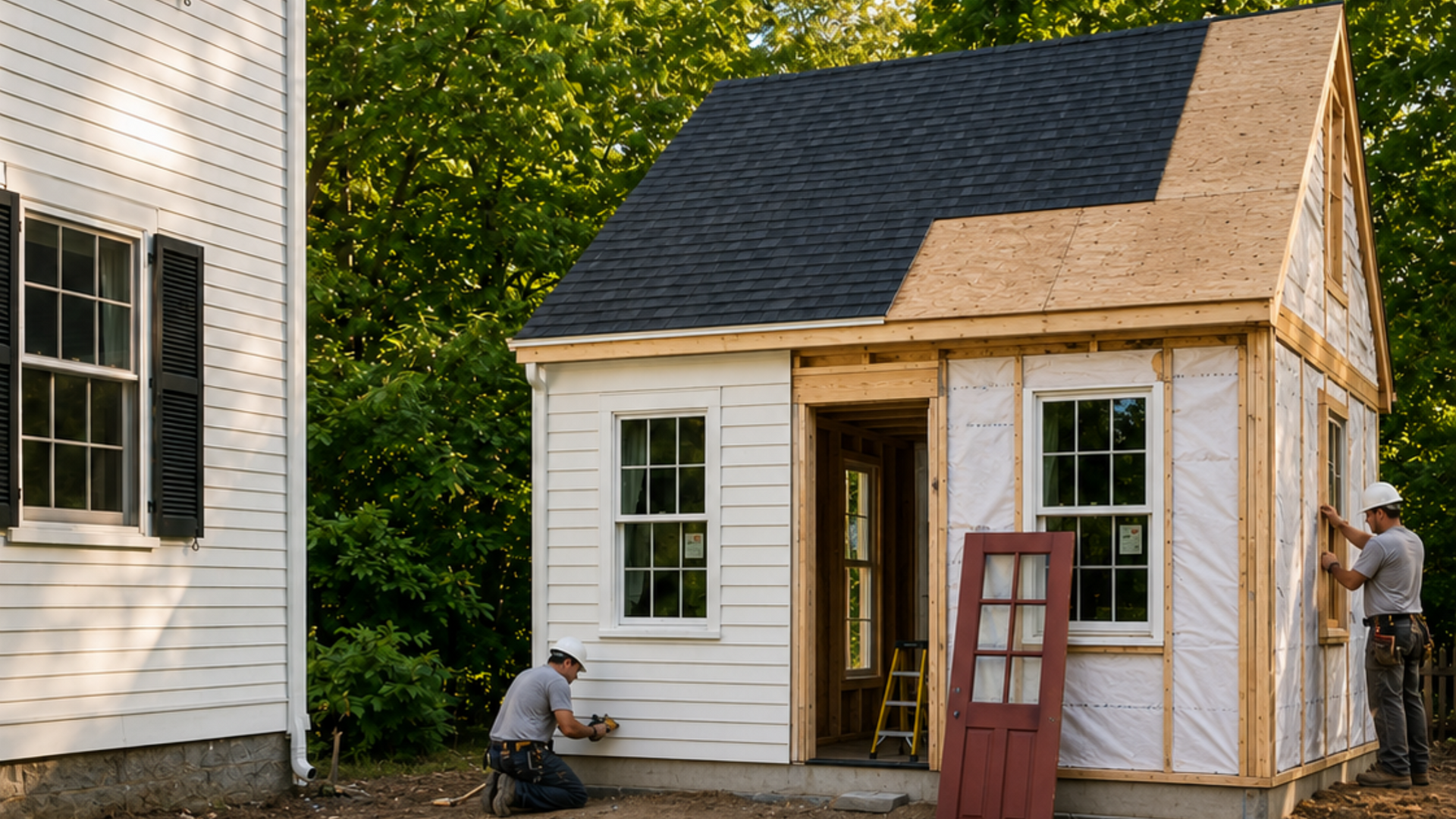
Could Your Property Support an ADU?

Caroline Brodsky • June 17, 2026

Understanding ADU Feasibility in Massachusetts


Accessory Dwelling Units (ADUs) are quickly becoming one of the most popular housing solutions in Massachusetts. Whether you're looking to create space for family members, generate rental income, or increase your property's long-term value, recent state legislation has made ADUs more accessible than ever before.


In fact, Massachusetts' Affordable Homes Act now allows qualifying ADUs of up to 900 square feet to be built "by right" in single-family zoning districts throughout the Commonwealth, reducing many of the zoning barriers that previously prevented homeowners from moving forward.


But before investing in an ADU project, the most important question remains:


Can Your Property Actually Support an ADU?


While state law has simplified the approval process, every property has unique physical, utility, and site constraints that determine what's realistically possible.


What Determines ADU Feasibility?


Lot Size and Property Layout


Every property presents different opportunities and limitations. Available yard space, setbacks, topography, wetlands, easements, and existing structures all influence what can be built and where.

Even with statewide ADU allowances, municipalities may still enforce reasonable dimensional requirements such as setbacks, height restrictions, and lot coverage regulations.


Utility Capacity


An ADU requires sufficient infrastructure to support another living unit. Existing water, sewer, septic, electrical, and drainage systems may need upgrades depending on the size and location of the project.

For homes on septic systems, Title 5 compliance often becomes a critical part of the feasibility evaluation.


Access and Parking Considerations


Safe access for residents, emergency services, and construction equipment must be considered early in the planning process.

Massachusetts law limits local parking requirements for ADUs, and municipalities cannot require parking in certain transit-accessible locations. However, site conditions and practical parking needs still play an important role in design. 


Existing Structures


One of the most cost-effective ADU opportunities may already exist on your property.


Many homeowners successfully convert:

  • Detached garages
  • Basements
  • Attics
  • Existing additions
  • Carriage houses


Adaptive reuse projects often reduce construction costs while simplifying permitting and utility connections.


Understanding Massachusetts' New ADU Law


As of February 2025, qualifying ADUs are permitted by right in single-family zoning districts throughout Massachusetts. This means homeowners generally no longer need special permits or discretionary zoning approvals simply because they want to build an ADU.


Under current state regulations, an ADU must:

  • Be no larger than 900 square feet or 50% of the primary residence, whichever is smaller.
  • Include a separate entrance.
  • Meet applicable building and safety codes.
  • Comply with local dimensional requirements such as setbacks and height restrictions.


While these changes have opened new opportunities for homeowners, they do not automatically guarantee that every property is suitable for an ADU.


That's why feasibility analysis remains one of the most important steps in the process.


Why a Professional Site Assessment Matters


Many homeowners begin by exploring floor plans or architectural designs.


The smarter first step is determining whether the property can support an ADU before investing in design work.


A professional feasibility assessment can uncover:

  • Potential zoning considerations
  • Utility upgrade requirements
  • Site constraints
  • Drainage challenges
  • Septic capacity issues
  • Construction limitations
  • Cost-saving opportunities
  • Permit requirements


Understanding these factors early can help avoid costly redesigns, permit delays, and unexpected construction expenses.


How Landmark Helps


At Landmark Associates, we believe successful ADU projects start long before construction begins.


Our team evaluates your property, identifies opportunities and challenges, and helps you understand what's realistically achievable based on your site's unique conditions.


By approaching every project with a planning-first mindset, we help homeowners make informed decisions and avoid unnecessary surprises later in the process.


Ready to Explore Your Property's Potential?


Massachusetts homeowners now have more opportunities than ever to add living space, support multigenerational housing, and create long-term property value through ADUs.


The first step is understanding what's possible on your specific property.


Schedule a complimentary ADU feasibility consultation with Landmark Associates today and discover whether your property is ready for an Accessory Dwelling Unit.


By Caroline Brodsky June 16, 2026
Accessory Dwelling Units (ADUs) are receiving more attention than ever across Massachusetts. Recent changes to state housing policy have made it easier for many homeowners to explore adding an ADU to their property. Whether you're considering space for family members, creating a private home office, or adding long-term flexibility to your property, these changes have created new opportunities worth understanding. The question many homeowners are asking is: "What do the new ADU rules mean for my property? " The answer depends on more than just state regulations. Every property has unique conditions, and understanding those factors early can help you avoid costly surprises later. Why ADUs Are Becoming More Popular An Accessory Dwelling Unit is a smaller secondary living space located on the same property as a primary residence. Homeowners are exploring ADUs for a variety of reasons: Housing for aging parents Space for adult children Private guest accommodations Dedicated home offices Potential rental opportunities Long-term property flexibility As housing costs continue to rise throughout Massachusetts, ADUs are increasingly viewed as a practical way to maximize existing property value and functionality. What Has Changed? Massachusetts has taken steps to encourage the creation of additional housing options, including ADUs. While these changes may make ADUs more accessible in certain situations, homeowners should understand that state regulations are only one piece of the puzzle. Important considerations still include: Lot size and property layout Utility capacity Building code requirements Site access Drainage considerations Existing structures Local permitting requirements Simply put, a regulatory change does not automatically mean every property is ready for an ADU. Every Property Is Different One of the most common misconceptions we hear is: "The law changed, so I can build an ADU now." In reality, successful ADU projects begin with evaluating the property itself. Questions that should be answered early include: Does the Property Have Adequate Space? Site conditions, setbacks, and existing structures all impact feasibility. Will Utility Upgrades Be Required? Water, sewer, electrical, and drainage systems may need modifications depending on the scope of the project. What Construction Challenges Exist? Sloped lots, limited access, older infrastructure, and environmental considerations can influence project costs and timelines. What Permits Will Be Needed? Permit requirements vary based on project type, location, and existing property conditions. Why Early Planning Matters The most successful ADU projects start with planning—not construction. A professional feasibility review can help identify: Potential obstacles Cost considerations Utility requirements Design opportunities Permit pathways By understanding these factors upfront, homeowners can make informed decisions before investing in plans or construction. How Landmark Helps Homeowners Navigate the Process At Landmark Associates, we believe every successful project begins with a clear understanding of what is possible. Our team evaluates site conditions, identifies potential challenges, and helps homeowners understand the practical realities of their project before construction begins. We focus on what matters most: Clear communication Thorough planning Realistic expectations Reliable project execution Our goal is simple: help homeowners move forward with confidence. Ready to Explore Your ADU Options? If you're wondering how Massachusetts' changing ADU regulations may affect your property, start with a professional assessment. The right information today can help prevent costly surprises tomorrow. Schedule a consultation with Landmark Associates to learn whether your property may be a good candidate for an Accessory Dwelling Unit and what steps should come next.
By Caroline Brodsky June 9, 2026
Learn why summer is the best time for deck replacements, exterior restoration, and structural repairs. See how Landmark Associates transformed an aging multi-family deck system into a safer, longer-lasting asset.
By Caroline Brodsky May 26, 2026
Hiring the right general contractor can determine whether your project runs smoothly — or turns into a costly, stressful experience. Whether you’re managing a commercial property, overseeing a multifamily renovation, or improving your home, asking the right questions before signing a contract helps reduce risk, improve communication, and protect your investment. At Landmark Associates, we’ve spent over 20 years working with property managers, facility teams, HOAs, and homeowners across Massachusetts, Rhode Island, and Southern New Hampshire. One thing we’ve learned is simple: successful projects start long before construction begins. They start with clarity, planning, and choosing the right partner. Here are the most important questions every owner should ask before hiring a GC.