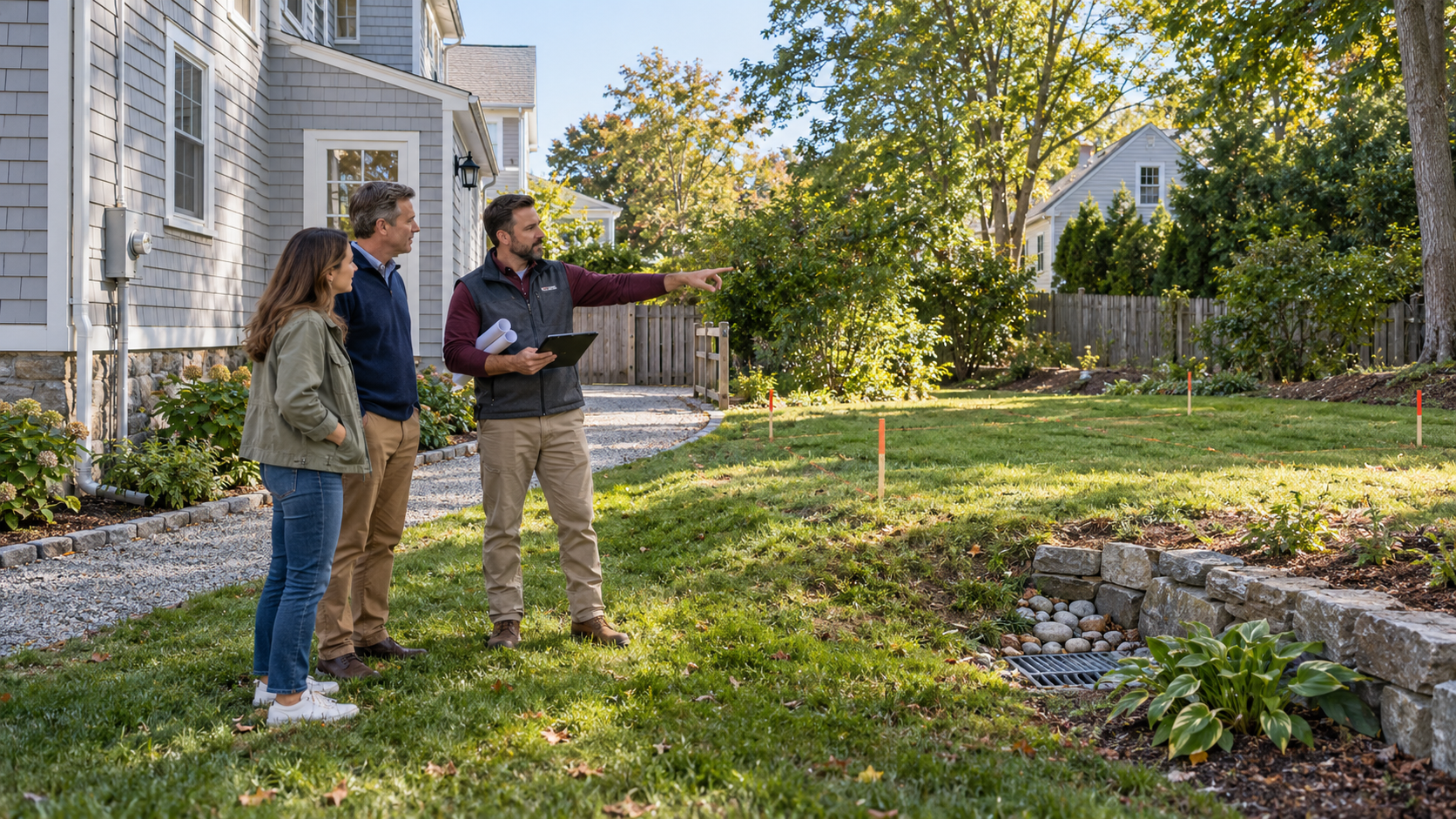
Denied for an ADU? You May Still Have Options
What Massachusetts Homeowners Should Know if Their ADU Plans Hit a Roadblock
Receiving news that your Accessory Dwelling Unit (ADU) project cannot move forward can be discouraging. After spending time researching, planning, and imagining how additional living space could benefit your family, a denial may feel like the end of the road.
Fortunately, that's often not the case.
Many homeowners who receive an ADU permit denied in Massachusetts discover there are alternative paths forward. In some situations, a revised design, a different ADU configuration, or a more thorough evaluation of the property can help overcome challenges that initially seemed impossible.
Every property is different, and understanding why an application was denied is the first step toward identifying a solution.

Why ADU Applications Get Denied
An ADU denial rarely happens for a single reason. More often, it is the result of one or more site conditions, design limitations, or permitting requirements that need to be addressed before a project can move forward.
Some of the most common reasons include:
- Limited buildable area on the property
- Setback or placement conflicts
- Utility capacity concerns
- Drainage or grading issues
- Existing easements
- Access or emergency vehicle requirements
- Building code compliance
- Incomplete project documentation
A denial does not necessarily mean your property cannot support an ADU. It simply means additional planning or a different approach may be required.
Understanding Common Site Challenges
Every property presents unique opportunities and constraints.
Even neighboring homes may have completely different conditions that affect ADU feasibility.
Lot Size and Shape
Irregular property lines or limited backyard space can influence where an ADU may be located.
Sometimes a detached structure simply isn't the best solution, while another ADU type may work much better.
Existing Structures
Detached garages, sheds, retaining walls, swimming pools, mature trees, and utility easements all influence available building space.
Understanding how these existing conditions affect your project is an important part of the planning process.
Topography
Steep slopes or significant grade changes can increase construction complexity, foundation requirements, and overall project costs.
A professional site evaluation helps determine whether these conditions can be addressed through design.
Utility Limitations Can Often Be Solved
One of the biggest misconceptions homeowners have is that utility challenges automatically eliminate the possibility of building an ADU.
In reality, utility limitations often require additional planning—not necessarily a complete redesign.
Areas that may require evaluation include:
- Electrical service capacity
- Water service
- Sewer connections
- Natural gas availability
- Stormwater drainage
Depending on your property, upgrades may be necessary to support an additional dwelling unit.
Identifying these requirements early helps homeowners make informed financial decisions before investing in construction documents.
Setback and Placement Issues
Property setbacks determine how close a structure may be built to property lines or other buildings.
Placement issues are one of the most common reasons an ADU proposal encounters challenges.
Factors that may influence placement include:
- Front setbacks
- Side setbacks
- Rear setbacks
- Distance from existing structures
- Driveway and parking layouts
- Emergency access requirements
A revised building footprint or a different location on the property may provide a workable solution.
Alternative ADU Configurations May Open New Opportunities
Many homeowners immediately picture a detached cottage in the backyard when they think about an ADU.
However, detached structures represent only one option.
Depending on your property, another configuration may be a better fit.
Garage Conversions
An existing garage can often provide an excellent starting point for an ADU.
Benefits may include:
- Reduced site work
- Existing structural components
- Efficient use of existing space
- Potentially lower construction costs compared to new detached construction
Garage conversions are especially attractive when the structure is already located in a suitable area of the property.
Basement ADUs
Many Massachusetts homes have basements that can potentially be transformed into independent living spaces.
A basement ADU may provide:
- Additional living space
- Private accommodations for family members
- A dedicated guest suite
- Opportunities to maximize existing square footage
Because the primary structure already exists, this option may reduce some site-related challenges associated with new construction.
Attached ADUs
If a detached ADU isn't practical, an attached addition may offer another solution.
Attached ADUs can:
- Blend seamlessly with the existing home
- Utilize existing utility connections
- Preserve backyard space
- Provide convenient access while maintaining privacy
Every property should be evaluated individually to determine which approach makes the most sense.
Design Revisions Can Make a Big Difference
Sometimes the issue isn't whether an ADU can be built—it's how it has been designed.
Small design changes may create entirely new possibilities.
Examples include:
- Reducing the building footprint
- Reorienting the structure
- Relocating entrances
- Modifying parking layouts
- Reconfiguring outdoor space
- Choosing a different ADU type
An experienced construction team can often identify practical alternatives that weren't initially considered.
Why a Professional Feasibility Assessment Matters
One of the biggest mistakes homeowners make is investing in detailed plans before fully understanding their property's limitations.
A professional feasibility assessment helps answer critical questions before significant time and money are invested.
During a feasibility review, professionals evaluate factors such as:
- Property layout
- Existing structures
- Utility infrastructure
- Access requirements
- Site grading
- Drainage considerations
- Potential construction challenges
This process helps identify opportunities, reduce uncertainty, and establish realistic expectations before moving into design and permitting.
Why Homeowners Trust Landmark Associates
Every successful ADU project begins long before construction starts.
At Landmark Associates, we believe education and planning are just as important as craftsmanship.
Our team works closely with homeowners to evaluate their property, identify potential challenges, and explore practical solutions that align with their goals.
Whether you're beginning your ADU journey or looking for answers after a setback, we'll help you understand what may be possible and what steps come next.
The Bottom Line
Being told "no" doesn't always mean your ADU project is over.
Many homeowners who initially encounter obstacles are able to move forward after revisiting their property's layout, evaluating alternative ADU configurations, or making thoughtful design adjustments.
The key is understanding your property's unique conditions before making assumptions about what can—or cannot—be built.
Schedule Your ADU Feasibility Review
If you've received an ADU permit denial in Massachusetts, or you're unsure whether your property can support an Accessory Dwelling Unit, Landmark Associates is here to help.
Our experienced team can evaluate your property, explain your options, and help you determine the most practical path forward.
Contact Landmark Associates today to schedule your ADU feasibility review and take the next step toward unlocking your property's potential.