House Wrap: What It Does — and What It Doesn’t
Why Weather-Resistant Barriers Matter
Exterior building systems are designed to protect a structure from water, air infiltration, and long-term structural damage. One of the most important components of that system is the weather-resistant barrier (WRB)—commonly known as house wrap.
Despite how widely it’s used in modern construction, house wrap is often misunderstood. Many homeowners believe it completely blocks water or acts as a vapor barrier. It serves a more specific and important role within the building envelope.
Understanding how house wrap works—and how it should be installed—can help property owners prevent costly moisture damage and improve energy efficiency.
What House Wrap Actually Does
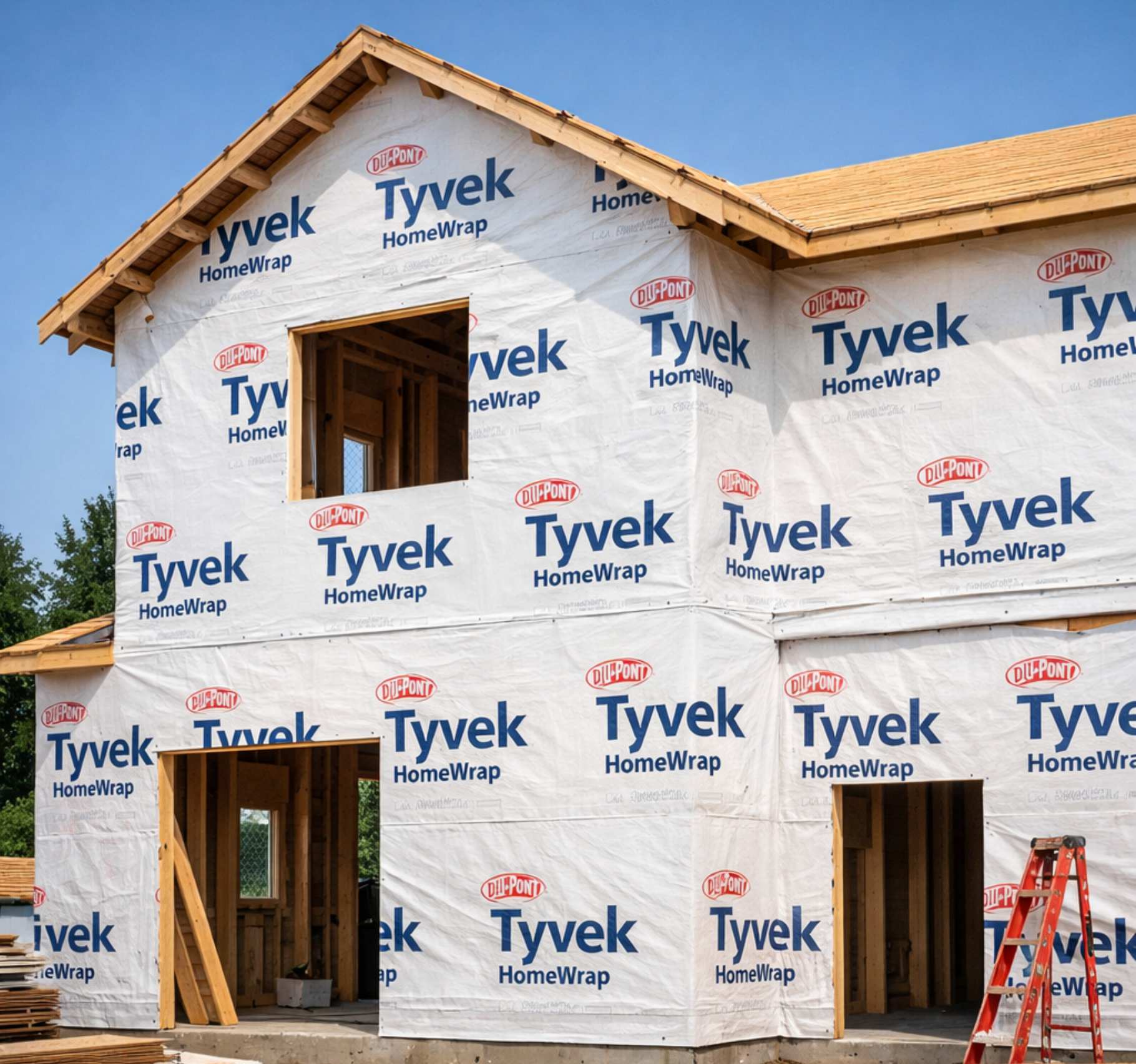
House wrap is a protective membrane installed over exterior sheathing before siding is applied. Its job is to act as a secondary barrier against weather while still allowing moisture inside the wall system to escape.
A properly installed house wrap helps:
• Reduce water intrusion
• Limit air infiltration
• Allow moisture vapor to escape
• Protect the building envelope during construction
• Improve overall energy efficiency
Common products used in construction include materials such as Tyvek and Typar, both designed to manage moisture while maintaining breathability.
However, house wrap alone is not a complete waterproofing system. It works as part of a larger system that includes flashing, sealants, siding, and proper drainage.
Common Myths About House Wrap
Myth 1: House Wrap Is Waterproof
House wrap helps shed water, but it is not designed to be a primary waterproof barrier. Proper flashing, siding, and installation details are required to keep water out of the wall system.
Myth 2: House Wrap Is a Vapor Barrier
House wrap is vapor permeable, meaning it allows moisture vapor to escape from the wall assembly. This helps prevent condensation buildup that can lead to mold or rot.
Myth 3: All House Wrap Products Perform the Same
Performance varies based on material quality, permeability ratings, and installation methods. Even high-quality products can fail if installed incorrectly.
Myth 4: Once Installed, It Requires No Attention
If flashing details, seams, or penetrations are handled poorly, water can still enter the building envelope. Installation quality matters just as much as the product itself.
Why Proper Installation Matters
Most water intrusion problems don’t come from the material itself. They come from installation errors.
Manufacturers have very specific installation instructions for the product to perform as designed and approved. For instance, compatible tape products are not all the same and it is best to utilize the tape that comes from the manufacturer of the barrier and not mix and match products.
In comparison, Zip wall panels are believed to incorporate the barrier into the product to save on the material and labor of installing the Vapor Barrier. This is not true. Zip wall panels are not a plywood sheathing product, it is an OSB (Orient Strand Board) with a very thin coating over the board. Across our industry the boards are installed incorrectly where only the seams between the panels are taped, but the nail holes at the attachment points are not sealed. When moisture enters the cavity area for any reason (exterior or interior via condensation etc.) and is able to get to the OSB board itself, the board will absorb the water and fall apart much more quickly than an actual plywood sheathing.
Key steps in proper installation include:
Surface Preparation
Sheathing should be dry, clean, and securely fastened before installation begins.
Correct Overlaps
Wrap should be installed in horizontal layers with manufacturer-specified overlaps to prevent water penetration.
Sealing Penetrations
Windows, doors, vents, and other openings must be properly flashed and sealed.
Tape and Seam Protection
Compatible tapes should be used to seal seams and maintain air-barrier continuity.
Inspection
The installation should be inspected for wrinkles, gaps, or damaged sections before siding is installed.
Even small installation mistakes can compromise the entire system.
The Role of House Wrap in Building Durability
When installed correctly, house wrap contributes to several long-term benefits:
Energy Efficiency
Reducing air leakage helps maintain interior temperature and can lower heating and cooling costs.
Moisture Management
Allowing trapped vapor to escape helps prevent mold, rot, and structural damage.
Longer Building Lifespan
A properly protected building envelope reduces maintenance issues over time.
These benefits make weather-resistant barriers an essential part of modern exterior construction.
When to Call a Professional
Property owners should monitor their exterior envelope for early signs of failure, including:
• Peeling siding
• Interior moisture stains
• Mold or mildew odors
• Visible gaps around windows or trim
If these issues appear, it may indicate problems with flashing, siding, or the weather barrier system behind it.
Construction professionals can inspect the exterior envelope and identify whether repairs or upgrades are needed.
The Bottom Line
House wrap plays an important role in protecting a building—but it is not a standalone solution.
Its effectiveness depends on:
• Product quality
• Proper installation
• Integration with flashing and siding systems
When these elements work together, house wrap helps protect a property from moisture damage, improves energy performance, and contributes to the long-term durability of the structure.
At Landmark Associates, our team focuses on delivering clear communication, reliable construction practices, and properly executed building envelope systems to ensure every project performs as intended.
Need Help Evaluating Your Exterior Envelope?
If you’re planning side replacement, exterior repairs, or renovation work, a professional evaluation of your building envelope can help identify potential risks before they become costly problems.
Contact Landmark Associates to schedule a walkthrough and discuss the best approach for protecting your property.