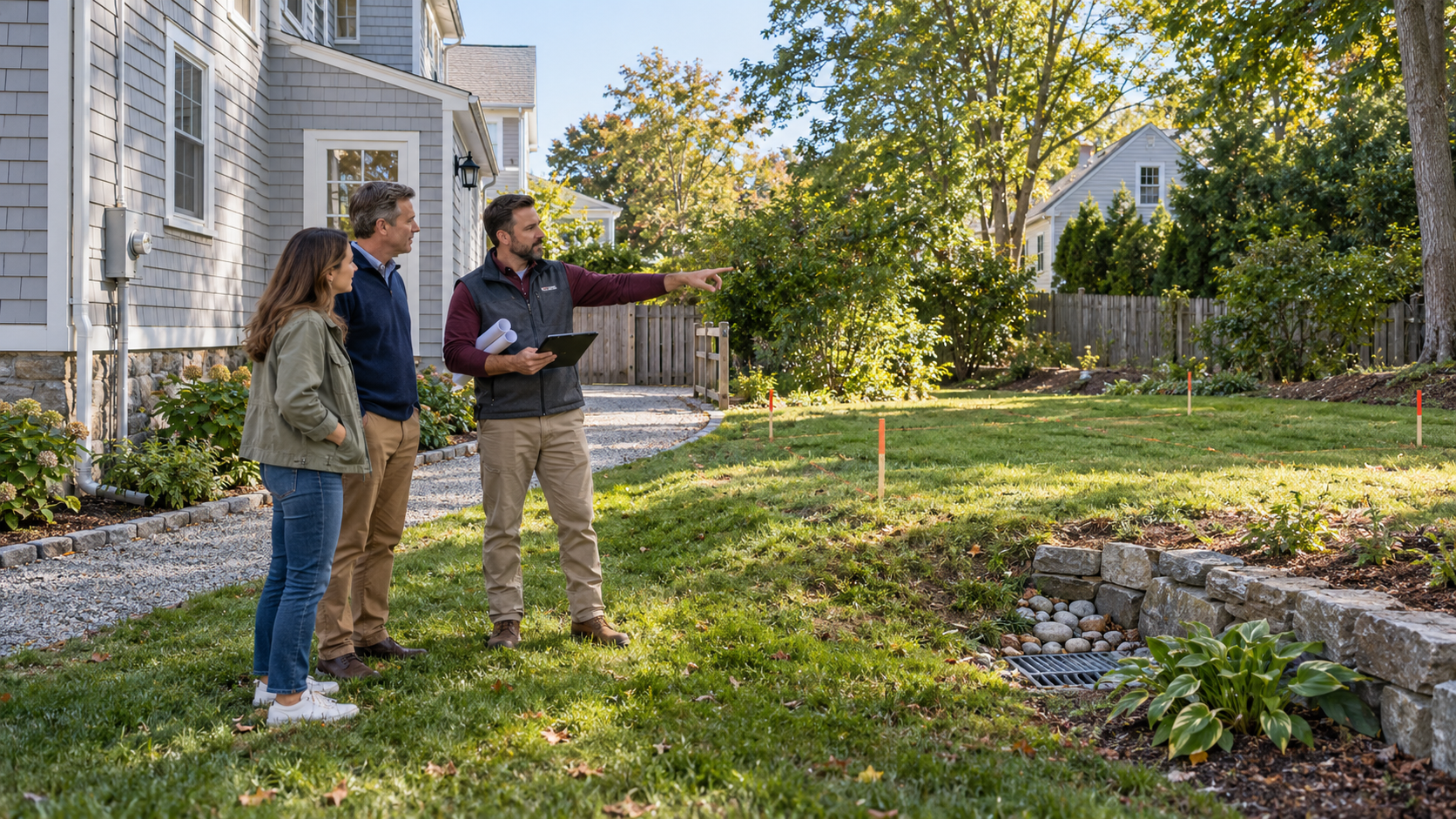
Questions Every Owner Should Ask Before Hiring a General Contractor
Caroline Brodsky • May 26, 2026

Hiring the right general contractor can determine whether your project runs smoothly — or turns into a costly, stressful experience. Whether you’re managing a commercial property, overseeing a multifamily renovation, or improving your home, asking the right questions before signing a contract helps reduce risk, improve communication, and protect your investment.


At Landmark Associates, we’ve spent over 20 years working with property managers, facility teams, HOAs, and homeowners across Massachusetts, Rhode Island, and Southern New Hampshire. One thing we’ve learned is simple: successful projects start long before construction begins. They start with clarity, planning, and choosing the right partner.


Here are the most important questions every owner should ask before hiring a GC.

1. Are You Licensed and Insured?


This should always be the first question.


A reputable contractor should be able to provide proof of:

  • State licensing
  • General liability insurance
  • Workers’ compensation coverage


According to FEMA and several construction industry experts, verifying credentials protects owners from liability, code issues, and unqualified work.


At Landmark Associates, we are fully licensed and insured and understand the importance of protecting both the property and the people inside it.


2. What Experience Do You Have With Projects Like Mine?

Not every contractor specializes in the same type of work.


A contractor who excels at residential kitchens may not be the right fit for occupied multifamily renovations, exterior envelope restoration, or commercial capital projects.


Ask for:

  • Similar project examples
  • Case studies
  • Before-and-after photos
  • References from comparable properties


Landmark Associates specializes in commercial renovations, repairs, exterior restoration, insurance reconstruction, and multi-trade projects throughout New England. Our team has extensive experience working in occupied buildings while minimizing disruption to tenants and operations.


3. Who Will Actually Manage My Project?


One of the biggest frustrations owners face is unclear communication once work begins.


Before hiring a contractor, ask:


  • Who is my point of contact?
  • Who supervises the field team?
  • How often will I receive updates?
  • How are issues documented and resolved?


Clear communication is one of the strongest indicators of a well-managed project. Industry experts consistently note that poor communication early in the process often leads to delays, disputes, and change order confusion later.


At Landmark, communication and transparency are central to our process. Our clients always know:


  • What’s happening
  • What the timeline is
  • What the next steps are
  • How the budget is tracking


That consistency helps eliminate surprises and reduce project stress.


4. How Do You Handle Permits, Inspections, and Code Compliance?


A professional GC should guide the entire construction process — not leave owners guessing.


Ask:

  • Who pulls permits?
  • How are inspections coordinated?
  • How do you stay current with local codes and regulations?


Contractors who suggest skipping permits or avoiding inspections should raise immediate concerns. Experts identify this as a major red flag that can expose owners to legal and financial risk.


Landmark proactively manages permitting, compliance, scheduling, and coordination to help projects move efficiently while meeting local requirements.


5. What Does the Proposal Actually Include?


Not all estimates are created equal.


A quality proposal should clearly outline:

  • Scope of work
  • Materials
  • Timeline expectations
  • Allowances
  • Exclusions
  • Payment schedule
  • Warranty information


Vague proposals often lead to disputes, hidden costs, and frustration later in the project. Construction experts recommend requesting detailed written documentation before any work begins.


At Landmark, we believe transparency builds trust. Our process focuses on providing clear, visual, and well-documented proposals so clients can make informed decisions with confidence.


6. How Do You Handle Unexpected Issues or Change Orders?


Every construction project has variables — especially in older buildings.

The important question is not whether challenges arise, but how the contractor responds when they do.


Ask:

  • How are unforeseen conditions documented?
  • How are change orders communicated?
  • How quickly are solutions provided?
  • How do you protect timelines and budgets?


Experienced contractors anticipate issues before they become emergencies.


For example, during the $14 million Old Reading School House condominium restoration in Reading, MA, Landmark Associates successfully coordinated multiple subcontractors and adjusted workflows in real time to accelerate the schedule and keep the project moving after severe fire damage.


That level of flexibility and communication is critical in complex renovation work.


7. Can You Provide References and Past Project Examples?


A contractor’s reputation matters.


Ask for:

  • Recent references
  • Completed project photos
  • Testimonials
  • Online reviews
  • Examples of long-term client relationships


Strong contractors should be comfortable sharing their work history and demonstrating consistent results.


Landmark has built long-standing relationships with property managers, commercial owners, HOAs, and facility teams throughout New England by focusing on reliability, responsiveness, and quality craftsmanship.


8. What Happens After the Project Is Finished?


The relationship shouldn’t end when the final invoice is paid.


A dependable contractor should remain available for:

  • Warranty support
  • Maintenance planning
  • Future capital improvements
  • Ongoing property needs


At Landmark Associates, many of our projects lead to long-term partnerships because clients know they can rely on our team when future needs arise.


Final Thoughts

Hiring a general contractor is about more than price.


It’s about choosing a team that communicates clearly, manages risk proactively, and delivers predictable results.

The right contractor helps protect your building, your budget, your tenants, and your timeline.


At Landmark Associates, we’ve built our reputation on being the contractor property owners and managers can trust — delivering high-quality work with clear communication and dependable execution across every phase of the project.


If you’re planning a renovation, repair, restoration, or capital improvement project, our team is here to help.


Contact Landmark Associates today to schedule a walkthrough or discuss your upcoming project.


๐Ÿ“ž 508-482-0104

๐ŸŒ www.landmarkassoc.com

โœ‰๏ธ [email protected]


By Caroline Brodsky May 22, 2026
The construction and property management industries continue to evolve quickly in 2026. Rising material costs, labor shortages, tighter project timelines, and increasing pressure on property performance are forcing owners, property managers, and facility teams to make smarter, faster decisions than ever before.
By Caroline Brodsky April 15, 2026
Getting denied for an Accessory Dwelling Unit (ADU) in Massachusetts can feel like a dead end, but in most cases, it’s not. ๏ปฟ
By Caroline Brodsky April 10, 2026
Why Weather-Resistant Barriers Matter Exterior building systems are designed to protect a structure from water, air infiltration, and long-term structural damage. One of the most important components of that system is the weather-resistant barrier (WRB) —commonly known as house wrap. Despite how widely it’s used in modern construction, house wrap is often misunderstood. Many homeowners believe it completely blocks water or acts as a vapor barrier. It serves a more specific and important role within the building envelope. Understanding how house wrap works—and how it should be installed—can help property owners prevent costly moisture damage and improve energy efficiency. What House Wrap Actually Does House wrap is a protective membrane installed over exterior sheathing before siding is applied. Its job is to act as a secondary barrier against weather while still allowing moisture inside the wall system to escape. A properly installed house wrap helps: • Reduce water intrusion • Limit air infiltration • Allow moisture vapor to escape • Protect the building envelope during construction • Improve overall energy efficiency Common products used in construction include materials such as Tyvek and Typar, both designed to manage moisture while maintaining breathability. However, house wrap alone is not a complete waterproofing system. It works as part of a larger system that includes flashing, sealants, siding, and proper drainage. Common Myths About House Wrap Myth 1: House Wrap Is Waterproof House wrap helps shed water, but it is not designed to be a primary waterproof barrier. Proper flashing, siding, and installation details are required to keep water out of the wall system. Myth 2: House Wrap Is a Vapor Barrier House wrap is vapor permeable, meaning it allows moisture vapor to escape from the wall assembly. This helps prevent condensation buildup that can lead to mold or rot. Myth 3: All House Wrap Products Perform the Same Performance varies based on material quality, permeability ratings, and installation methods. Even high-quality products can fail if installed incorrectly. Myth 4: Once Installed, It Requires No Attention If flashing details, seams, or penetrations are handled poorly, water can still enter the building envelope. Installation quality matters just as much as the product itself. Why Proper Installation Matters Most water intrusion problems don’t come from the material itself. They come from installation errors. Manufacturers have very specific installation instructions for the product to perform as designed and approved. For instance, compatible tape products are not all the same and it is best to utilize the tape that comes from the manufacturer of the barrier and not mix and match products. In comparison, Zip wall panels are believed to incorporate the barrier into the product to save on the material and labor of installing the Vapor Barrier. This is not true. Zip wall panels are not a plywood sheathing product, it is an OSB (Orient Strand Board) with a very thin coating over the board. Across our industry the boards are installed incorrectly where only the seams between the panels are taped, but the nail holes at the attachment points are not sealed. When moisture enters the cavity area for any reason (exterior or interior via condensation etc.) and is able to get to the OSB board itself, the board will absorb the water and fall apart much more quickly than an actual plywood sheathing. Key steps in proper installation include: Surface Preparation Sheathing should be dry, clean, and securely fastened before installation begins. Correct Overlaps Wrap should be installed in horizontal layers with manufacturer-specified overlaps to prevent water penetration. Sealing Penetrations Windows, doors, vents, and other openings must be properly flashed and sealed. Tape and Seam Protection Compatible tapes should be used to seal seams and maintain air-barrier continuity. Inspection The installation should be inspected for wrinkles, gaps, or damaged sections before siding is installed. Even small installation mistakes can compromise the entire system. The Role of House Wrap in Building Durability When installed correctly, house wrap contributes to several long-term benefits: Energy Efficiency Reducing air leakage helps maintain interior temperature and can lower heating and cooling costs. Moisture Management Allowing trapped vapor to escape helps prevent mold, rot, and structural damage. Longer Building Lifespan A properly protected building envelope reduces maintenance issues over time. These benefits make weather-resistant barriers an essential part of modern exterior construction. When to Call a Professional Property owners should monitor their exterior envelope for early signs of failure, including: • Peeling siding • Interior moisture stains • Mold or mildew odors • Visible gaps around windows or trim If these issues appear, it may indicate problems with flashing, siding, or the weather barrier system behind it. Construction professionals can inspect the exterior envelope and identify whether repairs or upgrades are needed. The Bottom Line House wrap plays an important role in protecting a building—but it is not a standalone solution. Its effectiveness depends on: • Product quality • Proper installation • Integration with flashing and siding systems When these elements work together, house wrap helps protect a property from moisture damage, improves energy performance, and contributes to the long-term durability of the structure. At Landmark Associates, our team focuses on delivering clear communication, reliable construction practices , and properly executed building envelope systems to ensure every project performs as intended. Need Help Evaluating Your Exterior Envelope? If you’re planning side replacement, exterior repairs, or renovation work, a professional evaluation of your building envelope can help identify potential risks before they become costly problems. Contact Landmark Associates to schedule a walkthrough and discuss the best approach for protecting your property.