What Could an ADU Make Possible for You?
One property. Different goals. More possibilities.
There is no single reason to build an Accessory Dwelling Unit (ADU).
For one homeowner, an ADU may mean keeping aging parents close while giving them independence. For another, it may be an opportunity to create rental income. Someone else may be thinking about downsizing, maximizing an underused garage or basement, or even purchasing a property with future expansion in mind.
That's why an ADU shouldn't begin with a floor plan.
It should begin with your goals.
Throughout the Landmark ADU Academy, we've explored the regulations, feasibility questions, planning considerations, costs, potential challenges, and construction realities homeowners should understand before moving forward.
For our final guide, we're bringing those pieces together around one important question:
What could an ADU make possible for you?
Keep Family Close While Preserving Independence
Housing needs change as families change.
Parents may want to remain close to their children and grandchildren without sharing the same living space. Adult children may need an affordable place to live while maintaining independence. Other families may simply want more flexibility as multiple generations navigate different stages of life.
An ADU can potentially provide private living space while keeping loved ones nearby.
Depending on the property, that could mean a detached backyard ADU, an attached addition, a garage conversion, or the conversion of existing space.
The goal isn't simply to create another dwelling.
It's to create the right living arrangement for your family.
Make More of the Property You Already Have
Many homeowners have space that isn't reaching its full potential.
That could be:
- An oversized backyard
- An existing garage
- A basement
- An underused portion of the home
- Space that could support an addition
An ADU may allow homeowners to turn that space into something more functional.
For some, that means additional living space. For others, it may create the potential for long-term rental income or greater flexibility in how the property is used.
But available space alone doesn't determine whether an ADU makes sense.
Zoning, setbacks, utilities, access, site conditions, existing structures, construction costs, and local requirements can all influence what is practical.
Before deciding what to build, understand what your property can realistically support.
Plan for What's Next
One of the greatest potential benefits of an ADU is flexibility.
The way you use the space when it is first built may not be the way it is used ten or twenty years later.
An ADU could begin as living space for a family member and eventually become a place for the homeowner to downsize. A guest suite could later serve another generation. Space created for today's needs may provide options that weren't anticipated when the project began.
That makes long-term thinking an important part of ADU design.
Consider questions such as:
- Who will use the space today?
- Who might use it in the future?
- Is accessibility important?
- How much privacy is needed?
- Could your family's housing need change?
- How flexible should the layout be?
Build around today but plan for tomorrow.
Considering Buying a Property with an ADU in Mind?
ADU planning doesn't always begin after someone owns a home.
Some buyers are specifically looking for properties that may support an ADU in the future.
If an ADU is part of your long-term plan, understanding feasibility before purchasing can be extremely valuable.
A large backyard may look promising, but size is only one consideration.
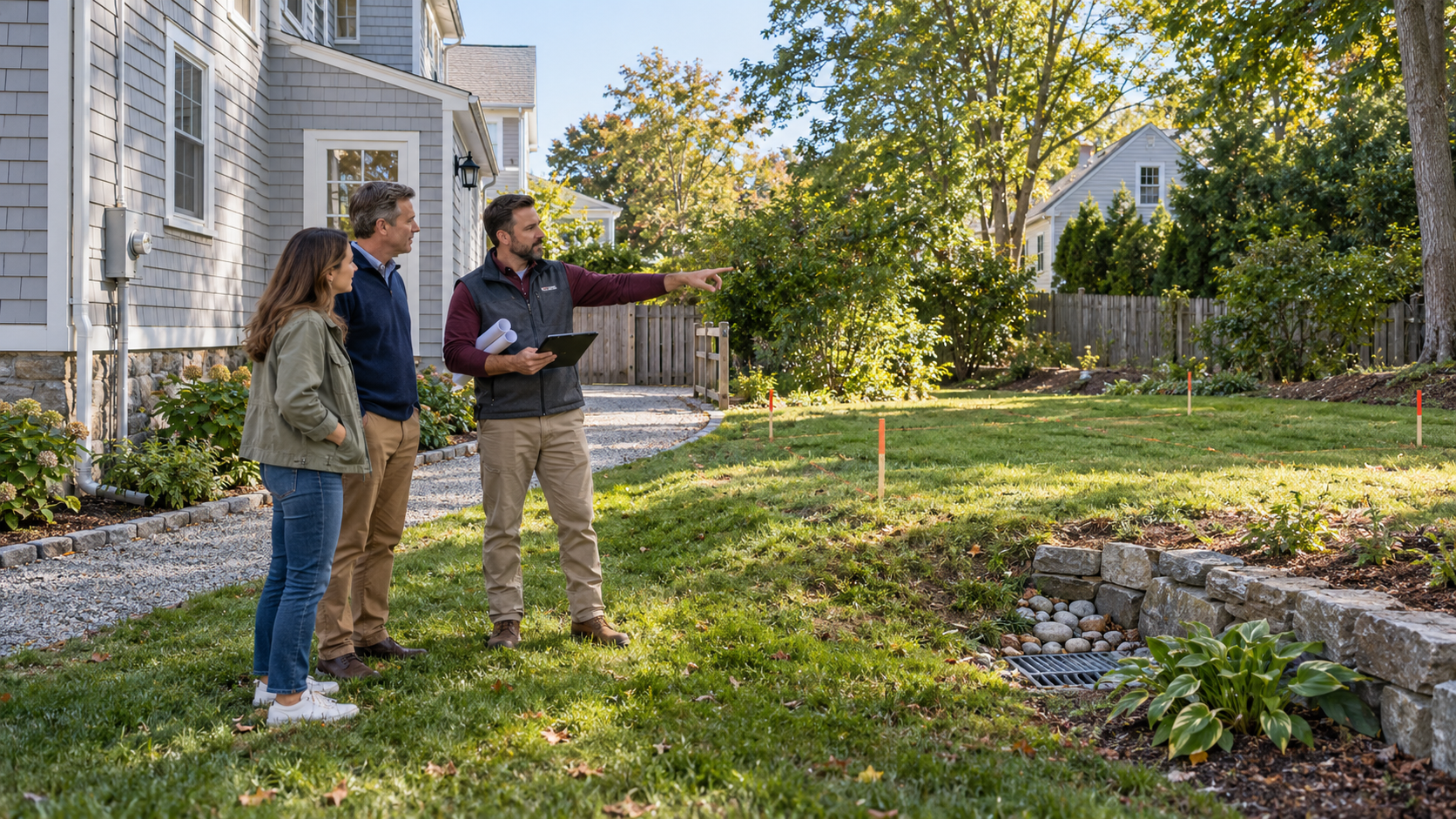
Potential feasibility factors can include:
- Zoning and applicable municipal requirements
- Setbacks and placement
- Existing structures
- Water and sewer or septic conditions
- Electrical capacity
- Site access
- Parking
- Drainage and topography
- Construction access
- Building and permitting requirements
A property shouldn't be assumed to support the ADU you envision simply because there appears to be enough room.
Start with answers before making a major investment.
Understand the Financial Picture
An ADU can be a significant investment, and homeowners should understand the financial picture before making major commitments.
The total cost can vary considerably based on the type of ADU, property conditions, design, utilities, site work, permitting requirements, materials, and construction approach.
Financing may also be part of the conversation. Depending on an owner's circumstances, potential paths could include home equity or other lending options available through qualified financial professionals.
For homeowners considering rental use, potential income may also factor into the decision.
However, projected rental income, financing terms, construction costs, and future property value should never be treated as guarantees.
The better approach is to understand the numbers, evaluate different options, and make decisions based on realistic expectations.
A successful project starts with financial clarity, not assumptions.
If You're Investing, Evaluate Before You Build
For investors and property owners, an ADU may present an opportunity to improve how an existing property is utilized.
But the opportunity needs to be evaluated carefully.
Before committing capital, consider:
- Property feasibility
- Zoning and regulatory requirements
- Expected project costs
- Utility requirements
- Design options
- Permitting considerations
- Construction schedule
- Site constraints
- Potential long-term use
- Financing strategy
A project that looks attractive conceptually may change once site conditions, permitting requirements, or construction costs are understood.
Better information upfront can reduce uncertainty later.
The Right ADU Starts with the Right Information
Throughout the 12-part Landmark ADU Academy, one message has remained consistent:
Homeowners should understand what's possible before making major investments.
That means looking beyond the finished ADU and considering the entire process.
Regulatory Clarity
Understand Massachusetts ADU regulations and the applicable requirements of your municipality.
Property Feasibility
Evaluate setbacks, lot conditions, utilities, access, existing structures, parking, drainage, and other factors that could influence the project.
Choice
Explore the solution that makes sense for the property and homeowner rather than assuming every ADU should look the same.
Options may include detached, attached, modular, garage-conversion, basement-conversion, and custom approaches.
Cost
Develop realistic expectations around construction costs and explore appropriate financing paths before committing to a project.
Realistic Planning
Understand that permitting, approvals, design, site conditions, material availability, inspections, and construction coordination can all affect a project's timeline.
Risk Reduction
Proper documentation, licensed supervision, inspections, and coordinated construction can help reduce unnecessary project risk.
Guidance
Work with experienced professionals who can help connect feasibility, planning, design, permitting, and construction rather than treating each decision in isolation.
You Don't Need to Have All the Answers
If you're at the beginning of the ADU process, you probably have questions.
That's exactly where you should be.
You don't need to know which design you want.
You don't need to know exactly what the project will cost.
You don't need to have every zoning or permitting requirement figured out.
And you don't need to decide today whether an ADU is definitely right for you.
You need to know where to start.
At Landmark Associates, our role is to help homeowners understand their options, ask the right questions, and make informed decisions based on their property, goals, budget, and future plans.
We believe that comes down to three things:
Choice. Cost Options. Convenience.
Choice in finding a solution that fits your needs.
Cost options and financial education to help you understand what may be attainable.
Convenience through coordinated guidance from early exploration through construction and completion.
Your Property. Your Goals. Your Next Step.
An ADU can mean something different to every homeowner.
It may create independence for someone you love.
It may help you stay in the community you've called home for years.
It may turn underused property into functional living space.
It may provide potential rental income.
Or it may simply give you options for a future you haven't reached yet.
Whatever your reason, the first step isn't deciding what to build.
It's understanding what's possible.
If you're considering an ADU in Massachusetts, Landmark Associates can help you evaluate your property, understand your options, and determine the right next step.
Let's create your ADU plan.
📞 (508) 482-0104
🌐 www.landmarkassoc.com
More space. More flexibility. More value. More choice.
This article is intended for general educational purposes. ADU feasibility, zoning, permitting, financing, costs, rental potential, property value, and site requirements vary by property and municipality. Homeowners should consult the appropriate municipal departments and qualified building, financial, legal, and real estate professionals when making project-specific decisions.